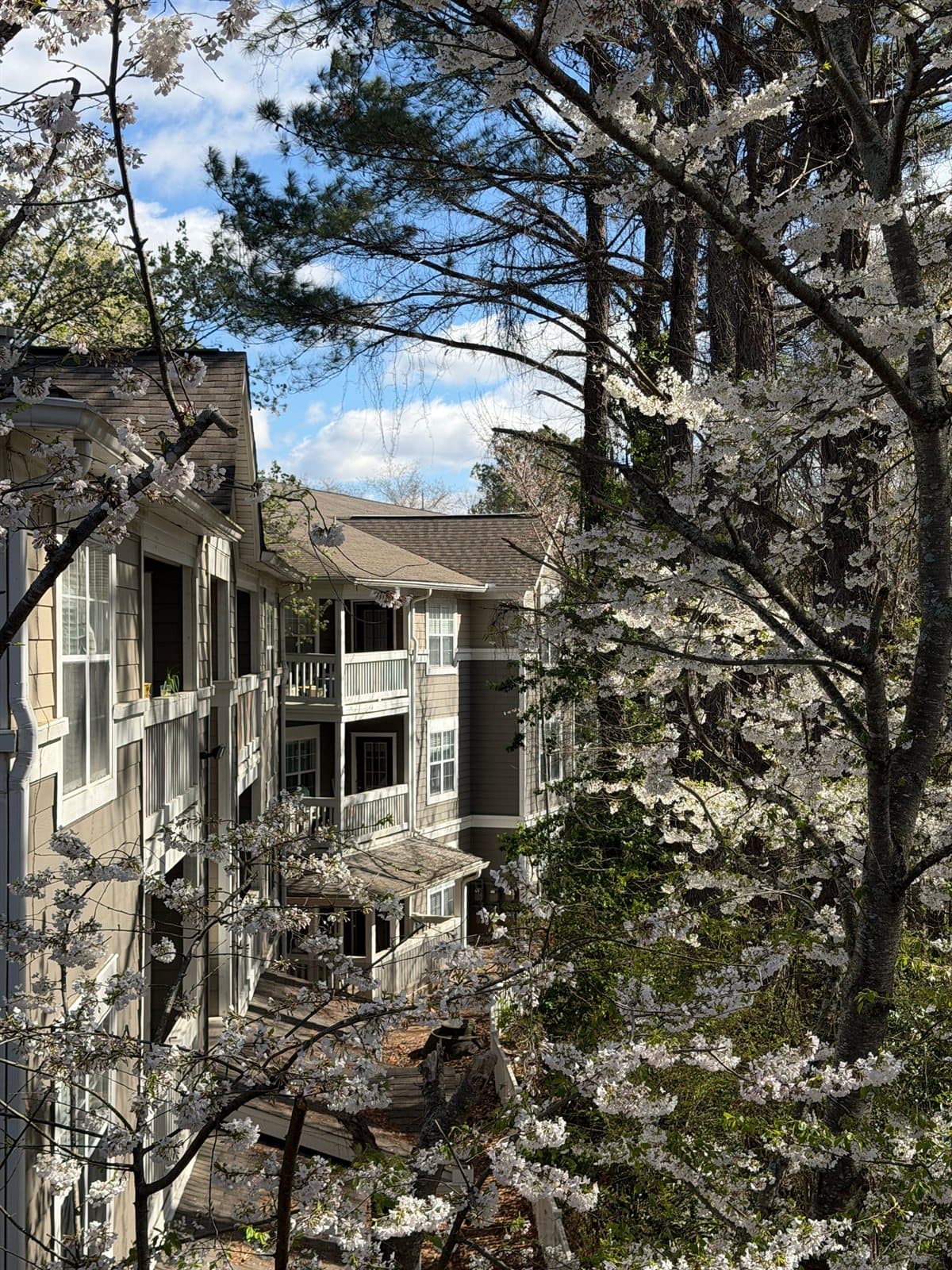
SECTOR FOCUS — AFFORDABLE & SENIOR HOUSING
The residents can't leave, and there's almost nowhere for them to go.
We track this market closely on both halves — new affordable family housing and occupied senior rehabilitation carry different construction problems, and both are under real financial pressure right now.
This page reflects general industry practice and BuildIQ Advisors' professional perspective as of publication. It is not tailored to any specific project, does not constitute engagement-specific advice, and does not create an advisory relationship. Verify current codes, standards, and site-specific conditions independently before acting.
CURRENT CHALLENGES
Insurance has become a structural problem, not a cyclical one.
Median per-unit insurance cost on LIHTC-financed housing reached $697 in 2023 — over 20% above 2022, and well above the 2016 level of $286 per unit — with some owners seeing premiums rise as much as 300% with no claims filed. Because LIHTC and other regulated properties operate under rent caps, owners can't pass higher premiums through to tenants; the cost has nowhere to go but the operating budget or deferred maintenance. Development cost per unit has risen as much as 40% since 2019 across LIHTC projects, driven by materials and labor inflation compounded by tariff-driven volatility in steel, electrical panels, and HVAC specifically.[1][2]
Capital stacks are fragile, and the financing gap is real.
Cost, rate, operating expense, timeline delay, and subsidy uncertainty can all move against a deal at once, and lenders now underwrite labor shortages and tariff exposure as standard risk, not tail risk. The permanent 12.5% increase to 9% LIHTC allocations is a real tailwind, but it leaves a real remaining gap dependent on subordinate financing whose own availability is compressing.[3][4]
On occupied rehabilitation, the Uniform Relocation Act is a legal deadline, not a courtesy.
On any federally funded occupied rehabilitation, the Act embeds a legal deadline directly into the construction schedule: mandatory reimbursement of moving and increased housing costs, a bar on unreasonable rent increases on return, required advance notice, and a hard one-year statutory limit on temporary relocation. An agency that fails to return a resident within that year can become liable for the full cost of a permanent displacement.[5]
Very little new senior supply exists to absorb displaced residents.
National senior housing occupancy is running near 89.9% with fewer than 16,000 units under construction nationwide, which is exactly why in-place, swing-unit phasing — not build-new-then-relocate — is the default strategy. Much of the older public and affordable stock (1960s–1980s vintage) carries fire and life-safety, façade, and riser conditions that don't meet current code and must be brought current while the building stays occupied — the same “cannot disable life safety around a vulnerable, non-ambulatory population” logic that governs infection-control and life-safety sequencing in healthcare, applied here to elderly and disabled residents instead of patients.[6]
WHAT SHOULD BE CONSIDERED TO OVERCOME THEM
HOW IT'S ACTUALLY GETTING BUILT
Swing-unit, small-group phased rehabilitation
Proven and standard — the default approach
Construction on small groups of units at a time, existing tenants relocated to empty units within the same building — proven and standard, the default approach precisely because so little replacement supply exists to absorb full-building displacement. The tradeoff: swing-unit rehab protects residents but extends duration and cost compared to a vacant gut-rehab, compounding directly against the up-to-40%-since-2019 cost escalation.[7]
State-sponsored captive and collective insurance models
Emerging, state-backed pilot — not yet a mature national mechanism
New York's Milford Street captive, backed by a $2 million state loan, pools affordable-housing-specific risk to bring premiums below open-market rates. The tradeoff: captive insurance pools reduce premium volatility but concentrate rather than diversify risk — a pool of similar affordable-housing assets shares a similar exposure profile, so a single bad year across the pool is felt by every member.[8]
The permanent 12.5% LIHTC allocation increase
Live, operating financing mechanism — not a proposal
A real tailwind on the capital stack. The tradeoff: it closes part of the capital gap but leaves the remaining share dependent on subordinate financing whose availability is exactly what's compressing. What's genuinely unsettled: whether captive insurance models can become self-sustaining without continued public subsidy — only one state program exists as evidence, and it's too early to call.[9]
WHAT WE WOULD HELP THEM NAVIGATE
- Pressure-testing the actual current insurance quote for this specific asset against the development budget before financial close — not the trend line, the real number — and flagging whether a captive or collective option changes the math.
- Building the one-year temporary-relocation clock into the phasing schedule as a tracked, hard constraint from day one, rather than an assumption residents will be back in time — the difference between a compliant project and a liability exposure that surfaces as a legal problem, not a schedule one.
- Verifying which portion of the capital stack is committed LIHTC equity versus assumed subordinate or gap financing, and stress-testing what happens to schedule and scope if the gap financing doesn't close on the assumed timeline.
- Confirming the swing-unit phasing plan's extended carrying cost and extended general conditions are actually priced into the development budget — not assumed away because the budget was modeled on a vacant-rehab timeline this project's occupancy won't allow.
- Running a current-code gap analysis against actual building condition before scope is finalized, rather than pricing to original construction-era documents and discovering the gap as a life-safety change order.
This is the deepest discipline on the record. A major public capital program directed $200–300 million annually across 125-plus concurrent projects — 185 projects, approximately $1.07 billion in total construction value, a staff of 70-plus. Within that program, affordable veterans housing ($25 million, 82 units), a joint-venture family housing rehabilitation (70 units), and an accelerated gut rehabilitation ($54 million, 218 units, completed in under a year) represent the family and workforce side. Two further projects — a $43 million, 450-unit occupied senior high-rise with 100% interior rehabilitation including life-safety, façade, and riser replacement, residents in place throughout, and a $39 million, 181-unit, 20-story complete gut rehabilitation — represent the occupied-senior side, alongside a $120 million-plus life-safety implementation program across 60 occupied senior buildings.
WEEK-ONE QUESTIONS
WEEK ONE — WHAT WE'D ASK ON A PROGRAM LIKE THIS
- 01
What is the actual current insurance quote for this specific asset — not the trend line — and is a captive or collective option available in this state?
- 02
If this is a federally funded occupied rehab, has the one-year relocation clock been built into the phasing schedule as a tracked constraint, or is “residents will be back in time” an assumption?
- 03
What fraction of the capital stack is committed LIHTC equity versus subordinate or gap financing, and what happens to the schedule and scope if the gap financing doesn't close on the assumed timeline?
- 04
What is the actual current life-safety and envelope condition of this specific building — has a current-code gap analysis been performed, or is scope based on original construction-era documents?
- 05
Has the extended carrying cost and extended general conditions from swing-unit phasing been priced into the development budget, or does the budget assume a vacant-rehab timeline this project's occupancy won't allow?
Professional Services Disclosure
BuildIQ Advisors provides construction advisory and consulting services under signed engagement agreements, performed to the standard of care customary for the industry. We are not a licensed architecture, engineering, accounting, or law firm — advice requiring those licenses should come from one. Engagement terms govern each project.